
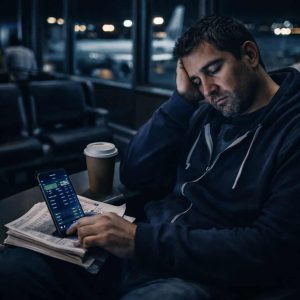
 Travel and scheduling are two of the most underrated variables in sports betting. They don’t show up cleanly in box scores. They rarely get the same attention as injuries or matchups—even if you’re checking odds right after a MrJack Bet login. And yet, they quietly influence performance every night. Sportsbooks account for them. Professional bettors do too. Casual bettors often don’t. Understanding how travel, rest, and scheduling strain affect teams helps explain why some results feel predictable only after they happen. It also highlights where pricing can lag behind reality.
Back-to-Backs: More Than Just Fatigue
Back-to-back games are one of the clearest scheduling disadvantages, especially in sports like basketball and hockey. Playing two games in two nights isn’t just about tired legs. It’s about reduced preparation, limited recovery, and compromised decision-making. Physical fatigue matters, but mental fatigue often matters more. On back-to-backs:
- Reaction times slow
- Defensive rotations break down.
- Late-game execution suffers
- Bench depth becomes more important.
Not all back-to-backs are equal, though location matters. A home-home back-to-back is very different from a road-road situation, especially when travel happens overnight. Sportsbooks usually shade lines for back-to-backs, but that adjustment is often blunt. It doesn’t always reflect matchup specifics, roster age, or how much the team relied on starters the night before. Bettors who treat all back-to-backs the same miss those nuances.
Time Zone Fatigue Is Real and Asymmetrical
Crossing time zones disrupts sleep, routine, and circadian rhythm. Athletes are not immune to that, even with charter flights and luxury hotels. East-to-west travel tends to be easier than west-to-east. Gaining time is less disruptive than losing it. That asymmetry matters, especially in early start times. A team flying west and playing a late local game may be fine. A team flying east and playing an early tip or kickoff often isn’t. The effects show up in subtle ways:
- Slower starts
- Reduced pace
- Lower shooting efficiency
- Poor communication early in games
These edges don’t always decide outcomes on their own. But when combined with other factors, they matter. Sportsbooks account for time zones in a general sense. They don’t constantly adjust enough for specific scenarios, especially when travel is layered on top of short rest.
Short Rest Scenarios Are Where Pricing Can Lag
Short rest doesn’t always mean a back-to-back. It can also mean:
- Late-night games followed by travel
- Overtime games before the next matchup
- Extended minutes for starters in previous games
These situations create hidden fatigue that doesn’t show up in the schedule itself. A team might technically have a day off, but if that day includes a cross-country flight after a late finish, the recovery window is smaller than it looks. This is where bettors who only glance at rest days get misled.
Short rest impacts:
- Practice quality
- Game planning
- Injury risk
- Rotational flexibility
Sportsbooks are aware of rest disparities, but they often rely on surface-level indicators. When fatigue is situational rather than structural, it’s easier to underprice it.
Why the Market Often Undervalues Scheduling Stress
One reason scheduling effects get overlooked is that they don’t create clean narratives. Injuries are obvious. The weather is obvious. Travel fatigue is gradual and inconsistent. Sometimes teams overcome it. Sometimes they don’t. That variability makes it easy to dismiss. Another reason is public perception. Recreational bettors tend to focus on:
- Star players
- Recent wins and losses
- Standings and records
They don’t downgrade a team because it’s playing its third game in four nights across multiple cities. Sportsbooks don’t want to move lines too aggressively against public opinion unless sharp money forces them to. That creates small windows in which the price doesn’t fully reflect the circumstances. Those windows don’t last long. But they appear often enough to matter.
Travel Affects Teams Differently
Not all teams respond to travel the same way. Factors that influence travel impact include:
- Average roster age
- Depth and rotation size
- Coaching style
- Pace of play
- Reliance on individual shot creation
Older teams and teams with thin benches tend to suffer more on tight schedules. High-tempo teams feel fatigue faster than slower, grind-it-out teams. Context matters. Two teams on the same rest profile can still be in very different situations. This is where raw schedule data isn’t enough. You need to understand how the team actually plays.
How Bettors Misuse Travel Angles
Travel and scheduling edges are easy to overuse. Some bettors unthinkingly fade back-to-backs. Others automatically bet against teams crossing time zones. That approach sometimes works, often fails, and stops working once it becomes predictable. The value isn’t in the angle itself. It’s in how that angle interacts with price. If a team is on a brutal schedule and the line reflects it entirely, there’s no edge. If the market underreacts, there might be. Betting travel angles without accounting for market adjustments is just another form of narrative betting.
Combining Scheduling With Market Timing
Travel and rest matter most when paired with timing. Early lines often reflect raw power ratings more than situational stress. As the market digests scheduling factors, lines adjust. Bettors who identify tough spots early can sometimes beat those moves. Bettors who wait often end up paying for information everyone else has already processed. This is especially true in:
- Long road trips
- Extended homestands ending in travel
- Compressed schedule stretches
The edge isn’t knowing travel matters. Everyone knows that. The edge is knowing when it matters more than the market expects.
The Bottom Line
Travel and scheduling affect performance in ways that don’t always show up in stats or headlines. Back-to-backs, time zone fatigue, and short rest scenarios quietly influence pace, execution, and consistency. Sportsbooks price these factors, but not perfectly. The adjustments are often generalized rather than contextual. For bettors, the goal isn’t to unthinkingly fade tired teams. It’s to understand when fatigue is real, when it’s exaggerated, and when the market hasn’t fully caught up. Like most edges in betting, the value isn’t in the idea itself. It’s in how early, how selectively, and how accurately you apply it.
 Choosing the right league to specialize in is one of the most important decisions a bettor can make. It shapes the quality of your analysis, the types of edges you can find, and the consistency of your results over time. Many bettors jump between competitions chasing action, logging into platforms like Bet 10 login just to find something to bet. That usually leads to shallow knowledge and missed value. Specialization works because betting markets reward focus.